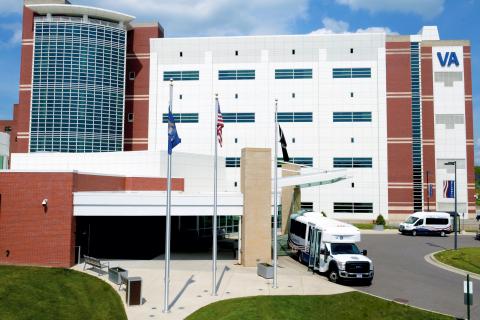
About the Activities Available
The Rehabilitation, Extended, and Palliative Care activities at VA Ann Arbor Healthcare System include —
- Extended Care Center
- Geriatric Medicine
- Home and Community-based Care
- Palliative Care
- Physical Medicine & Rehabilitation
- Geriatric Research Education and Clinical Center (GRECC)
Services Offered
Physical Medicine and Rehabilitation (PM&R)
Services include —
- physiatry (PM&R) clinic and inpatient consultation
- spinal cord injury clinic and inpatient consultation
- occupational therapy
- physical therapy
- speech therapy
- specialized services to veterans in need of rehabilitation following amputation, stroke, traumatic brain injury, and spinal cord injury
Geriatric Medicine
Services include —
- inpatient geriatric medicine consultation
- outpatient geriatric evaluation and management clinic
Palliative Medicine
Services include —
- inpatient palliative care consultation
- outpatient palliative care clinic
Extended Care Center (ECC)
The ECC is a hospital-based transitional care unit with an average length of stay of 32 days. It includes a Geriatric Evaluation and Management Unit. Most patients require extended rehabilitation and care following surgery and/or lengthy hospitalizations before discharge to a safe location appropriate for the veteran’s level of accomplishment.
Palliative care is also provided within the Extended Care Center.
Home and Community-based Care (HCBC)
HCBC consists of programs that manage care in veterans’ homes and community settings.
Services include —
- adult day healthcare
- community nursing home care
- home-based primary care
- home hospice care
- home IV therapy
- home telehealth care
- respite care
- skilled and unskilled home care
Geriatric Research Education and Clinical Center (GRECC)
The GRECC integrates models of clinical care, education, and research to further the care of geriatric patients with dementia. GRECC investigators focus clinical and basic science research programs on aging physiology as well as cellular response to injury and its relation to metabolic and functional status. A neuroscience focus includes problems of Alzheimer's Disease, aging and the autonomic nervous system, and clinical studies of mobility in older adults. Finally, a health systems focus is designed to identify clinical and administrative structures that will improve the balance between quality and cost in the care of older veterans. An education component provides a wide variety of services in the area of education and training to VA and non-VA health professionals at the local, network, and national levels, with recent conferences related to cognitive impairment and palliative and hospice care.
|